Published on Jul 06, 2026
8 Most Affordable US Cities for International Students
Share on socials:


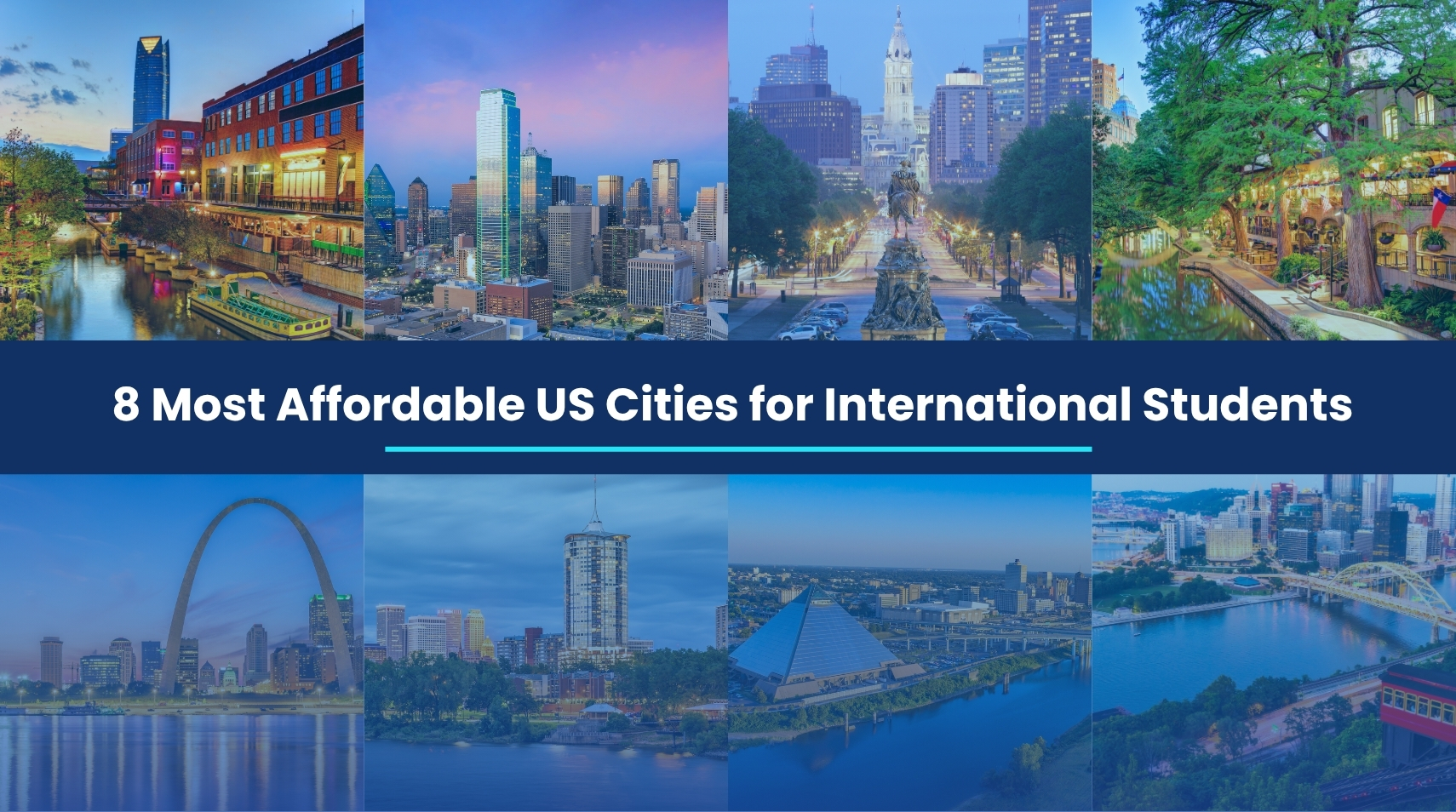
U.S. study costs can feel overwhelming, especially when families are trying to judge rent, food, transit, and tuition at the same time. If you're searching for affordable US cities that still make sense for student life, this list gives practical help, not hype.
The ranking draws on current cost signals, including C2ER-based student affordability data, plus household budget benchmarks in the style used by the U.S. Census Bureau. For international students, a city is affordable when rent is manageable, daily transport is realistic, groceries don't spike the budget, and part-time work is within reach.
What makes a city truly affordable for international students?
Low rent alone doesn't make a city a good budget choice. A cheap apartment can still cost more if you need a car every day, utilities run high, or the school sits far from jobs.
The best way to compare cities is to look at the full yearly picture:
Housing costs, including rent, deposit, and utilities
Food and groceries, which can differ a lot by region
Transportation, because transit-rich cities can save hundreds each month
Student work access, especially on-campus jobs and internship pipelines
Total return, which includes school quality and OPT-friendly career options
The 8 most affordable US cities for international students, ranked from Number 8 to 1
Where 2026 citywide figures vary by source, this ranking favors verified affordability patterns over fake precision.
8. Oklahoma City, Oklahoma
Oklahoma City is a calm and easygoing place, making it a great, low-pressure spot to start out. Students can easily find practical jobs in local hospitals, shipping companies, or right on campus. It is also very affordable to live here. The cost of living is about 15% lower than the national average, and a one-bedroom apartment usually costs between $870 and $934 a month.
However, you will probably need a car to get around. The area is also home to great schools like Oklahoma City University, Oklahoma State University-Oklahoma City, and the University of Oklahoma Health Sciences Center.
7. Dallas, Texas
Dallas brings a lively, big-city energy and a great mix of international foods, while offering more job opportunities than most affordable major cities. If you are looking for an internship, it is a fantastic place to build a career in technology, business, healthcare, or finance. When it comes to expenses, the average rent across the city is around $1,590 a month, and a single person can expect to spend between $2,200 and $3,400 monthly for overall living costs.
Public transportation works well, but it is mostly reliable in specific neighborhoods. For education, the area features well-known schools like The University of Texas at Dallas, the University of Dallas, and Dallas College.
6. Philadelphia, Pennsylvania
Philadelphia has a lively college town feel and a deep university culture, offering great internship options for an East Coast city. It is very easy for students to get around because many neighborhoods are highly walkable, and the public transit system is excellent.
While living here is cheaper than in nearby coastal cities like New York or Boston, prices can change quickly depending on the neighborhood you choose. The city is home to several major schools, including Temple University, Drexel University, and the University of Pennsylvania.
5. San Antonio, Texas
With its warm weather, strong local culture, and relaxed vibe, San Antonio feels very welcoming. Students have plenty of job choices here, especially in healthcare, tourism, and businesses linked to the military. Living here is quite affordable, with a cost of living that sits about 8% to 10% below the U.S. average.
However, the city is very spread out, so the money you save on rent might end up going toward gas and car expenses. The area is also home to great schools like The University of Texas at San Antonio, Trinity University, and San Antonio College.
4. St. Louis, Missouri
Next affordable city in our list is St. Louis. It offers a great mix of lower housing costs, big-city attractions, and a large, active student community. It is a fantastic spot for internships and career growth, especially if you are looking for roles in research, healthcare, or nonprofit organizations.
For a major city, living here is still highly affordable, though you will want to research specific neighborhoods since safety and public transportation can vary a lot from one area to the next. The city is also known for top-tier schools like Washington University in St. Louis, Saint Louis University, and the University of Missouri-St. Louis.
3.Tulsa, Oklahoma
Tulsa is smaller, friendlier, and less rushed than most other cities, giving it a very welcoming feel. Students can find good career starts here by looking for roles in local businesses, the energy sector, or rising tech startups. The biggest reason to move here is obviously the price.
Everyday costs stay very low by national standards, with a one-bedroom apartment usually renting for around $910 to $950 a month. However, public transit is limited, so you will definitely want a car to get around. The city is also home to great higher education options like The University of Tulsa, Oral Roberts University, and Tulsa Community College.
2. Memphis, Tennessee
Memphis offers a lively atmosphere full of great music, amazing food, and a strong local identity, all without the high prices you find in coastal cities. It is a very practical place for students to start a career, with plenty of job paths in shipping, healthcare, and distribution. Living here is a good fit for tight budgets, as a one-bedroom apartment typically rents for around $1,050 to $1,120 a month.
However, you will want to pick your neighborhood carefully since safety and vibes vary across the city, and you will likely need a car to get around. For schooling, the area is home to excellent options like The University of Memphis, Rhodes College, and Christian Brothers University
1 .Pittsburgh, Pennsylvania
And the number 1 affordable city for international students in our list is Pittsburgh. The city stands out for its closely connected, compact neighborhoods, great public transit, and what many consider the very best student atmosphere around. Pittsburgh has a strong network of major universities, making it much easier for students to land research positions, local internships, and valuable jobs after graduation.
A massive part of why it ranks first is its incredible balance of city life and affordability. The city remains one of the lowest-cost big cities in the country, with a typical one-bedroom apartment costing around $1,250 to $1,450 a month, while splitting a place with roommates can drop costs even lower. Top-tier schools like Carnegie Mellon University, the University of Pittsburgh, and Duquesne University all call this vibrant city home.
How to compare cities before you apply
Price each city the way you'll actually live, not the way a marketing page describes it. Compare dorms with shared apartments, then add utilities, groceries, transit, and a security deposit that may equal one to two months' rent.
Climate matters too, because winter gear, summer cooling, or daily car use can change the budget fast. Before deadlines close in, a simple guide to the US undergraduate application process can help you match city costs with a realistic application plan.
Side-by-side cost snapshot of the 8 cities
Some 2026 figures differ by source, so the table separates verified numbers from source-dependent estimates.
City | Typical 1BR rent | Est. monthly living cost | Transit or car need | Quick student fit |
|---|---|---|---|---|
Oklahoma City | $870 to $934 | About 15% below U.S. average | Car helpful | Lowest starting cost |
Dallas | About $1,590 | $2,200 to $3,400 | Mixed transit | Big-city job access |
Philadelphia | Source-dependent | Source-dependent | Transit strong | East Coast student network |
San Antonio | Source-dependent | COLI 90 to 92 | Car common | Warm, lower-cost metro |
St. Louis | Source-dependent | Below-average pattern | Mixed | Balanced value |
Tulsa | Source-dependent | Low-cost pattern | Car helpful | Calm, manageable pace |
Memphis | Source-dependent | Low-cost pattern | Car helpful | Good for tight budgets |
Pittsburgh | Source-dependent | Low relative costs | Transit workable | Best overall value |
The pattern is clear. Oklahoma City is strongest for ultra-low starting costs, Dallas gives the widest job market, and Pittsburgh delivers the best overall mix of affordability, transit, and academic depth. Recent 2026 big-city affordability data also supports Pittsburgh's position near the front of the pack.
Final thoughts
The cheapest city isn't always the smartest choice. Rent, transit, internships, and school quality work together, and one weak point can undo a low headline price.
Once you compare cities that way, the numbers become easier to manage. Careful planning, backed by current cost data, can protect your budget before you ever book a flight.
Planning your journey to study in the US? Let’s make it easier. AdviseBridge offers genuine, 100% free guidance to help you clear every hurdle. We will help you find the right universities, evaluate your profile, handle the application process, and ace your interviews. Connect with us today and let's get started on your path to the US.