Published on Jun 02, 2026
Studying in the US in 2026: Visa Delays, Safety, and ROI
Share on socials:


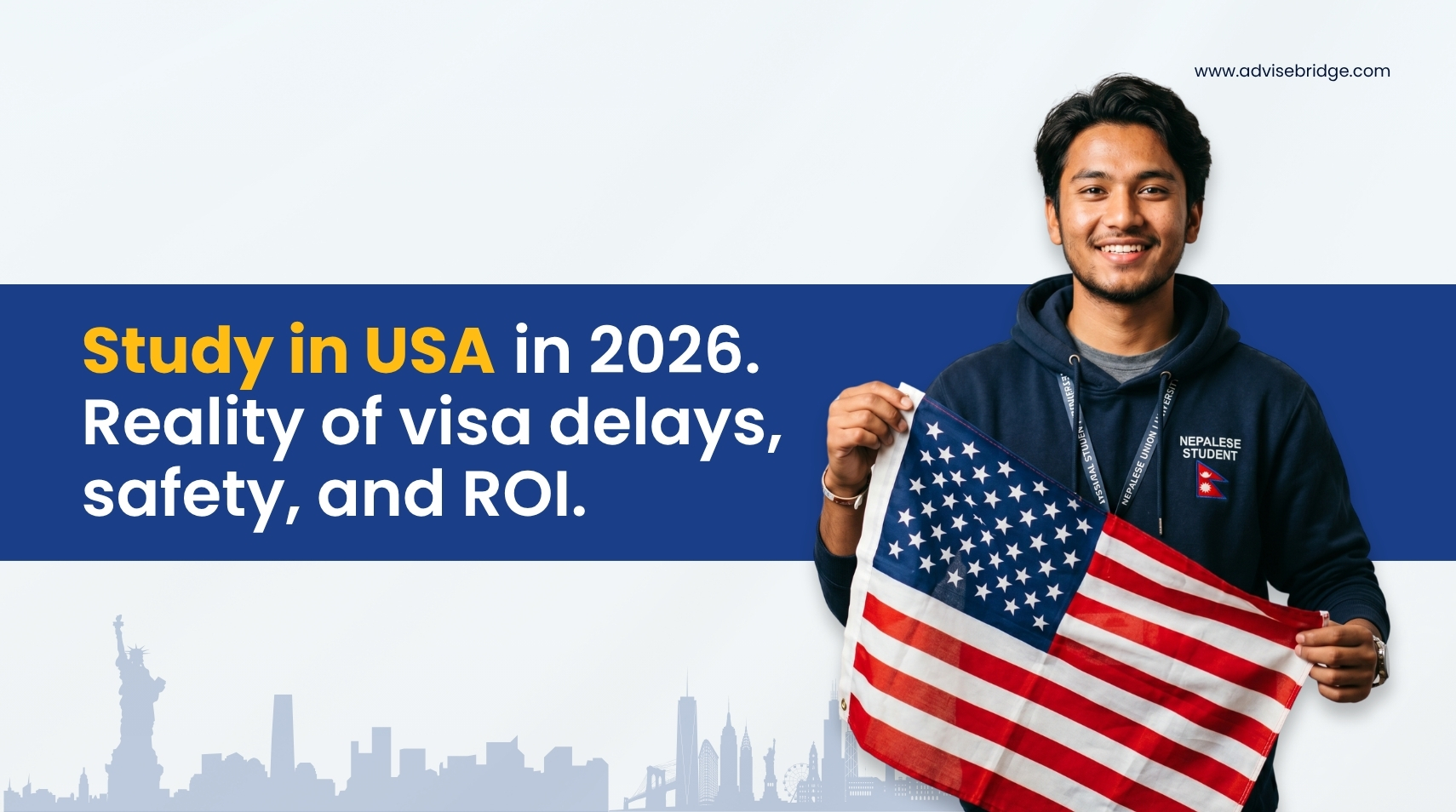
A dream can feel shaky when every new video tells a different story. For Nepali students hoping to study in the USA in 2026, three worries keep showing up: visa delays, safety, and whether the degree will be worth the cost.
The honest answer is steady, not dramatic. The US is still a strong option, but it no longer rewards casual planning. You need a sharper budget, a calmer visa strategy, and a clearer view of daily life before you say yes.
Why the US still attracts Nepali students, even with more uncertainty
The pull is still real. American universities offer strong labs, wide course choices, research access, and an internship culture that often connects classwork to real jobs. For many Nepali families, that mix matters because a degree is not only a certificate, it is a path to skills, contacts, and a broader job market.
Still, 2026 does not feel as open or as smooth as earlier years. Costs are higher, timelines are less stable, and families are asking harder questions. Recent F-1 visa data is a reminder that international enrollment can shift fast when visa conditions tighten.
Visa delays are real, so smart timing matters more than ever
Many students still get approved, but the road can take longer than expected. Interview slots may open late, documents may need extra review, and some cases move into administrative processing with no quick finish line. Because of that, a plan built around the last possible date can fall apart quickly.
Start earlier than feels necessary. Ask for your I-20 as soon as your admission and deposit are done, and make sure your passport, DS-160, SEVIS payment, and financial papers all match. Bank letters, sponsor details, and income proof should tell one clear story. Small mistakes often create bigger delays than students expect.
What Nepali students should do if their visa is late
If your visa is still pending near the start date, stay close to the university and ask about late arrival rules or deferral options. Panic usually makes paperwork worse. A calm backup plan is stronger. In fact, Open Doors 2025 findings noted that many colleges allowed admitted students to defer, which matters when timing slips.
Is it Safe to Study in the USA in 2026?
Safety is a top concern for international families, often fueled by sensationalized news coverage. However, evaluating safety requires looking at campus-level data rather than national headlines.
Safety in the US changes block by block. One campus may feel calm and well-lit, while an off-campus area a mile away feels different at night. So look beyond rankings and photos. Check dorm entry rules, campus alert systems, shuttle service, walkability, and how current students describe the neighborhood after dark.
Student’s Habits, on the other hand, also matter as much as location. Share your live location with a trusted friend when you travel late, use verified ride apps, avoid empty streets at night, and save emergency numbers on day one. Also, don't let homesickness push you into risky choices just to fit in. Staying aware is not fear, it is common sense.
Any international student coming from Nepal should know that they can always ask about support before they arrive Support makes a place feel safer faster. Ask whether the school has an active international office, airport pickup help, peer mentors, counseling, and student groups where South Asian or Nepali students already connect. Your first month can feel like cold water. A familiar voice, a WhatsApp group, or a senior student who explains the city can change everything.
The real ROI of a US education depends on the full picture
ROI starts with the full bill, not the tuition line on a brochure. Add housing, food, health insurance, winter clothes, travel, visa fees, and emergency money. A lower-cost university in a high-rent city can still drain a family budget. Before you commit, compare the total yearly cost, not only the scholarship amount.
When a US degree can pay off
The math improves when the program is strong and the career path is clear. STEM fields, business analytics, nursing, and other job-linked programs often offer better outcomes, especially when the school has internships, co-ops, and active career support. The degree can also pay back over time through better networks, stronger English, and access to larger employers.
When the math may not work in your favor
Sometimes the numbers don't support the dream. Heavy debt, a weak program, limited job fit, or a school with thin support can turn a hopeful plan into pressure. A recent SEVIS Trend shows how policy uncertainty still affects international students, so families should compare options with open eyes, including other countries or strong local paths.
How AdviseBridge helps Nepali students make a safer, smarter plan
AdviseBridge helps students move from hope to a workable plan. That includes shortlisting universities that fit academic goals and budget, checking documents before mistakes grow, preparing for visa interviews, and thinking through housing, city choice, and campus support. The value is not hype. It is structured. When the path to study in the US in 2026 feels crowded with mixed advice, clear guidance can save time, money, and stress.
On a Final Note
The US can still be a smart choice in 2026, but only when the decision matches both your dream and your numbers. A good plan starts early, checks safety with care, and treats visa timing as a real risk, not a small detail.
For Nepali students, the strongest move is not blind confidence or fear. It is clarity. When you know the cost, the place, and the backup plan, the dream stops feeling distant and starts feeling possible.